


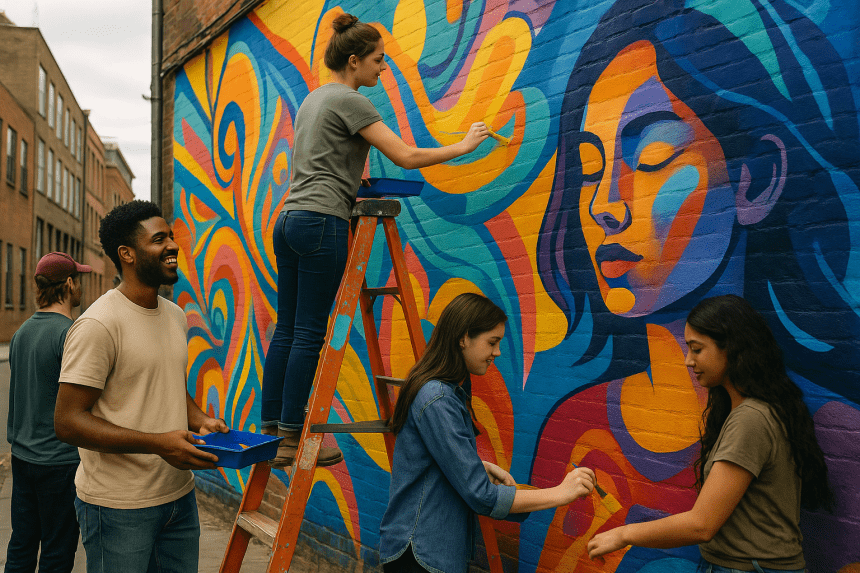
Urban environments often reflect the diverse narratives and rich histories of the communities that inhabit them. One of the most vibrant forms of expression in this context is through community-driven mural projects. These artistic initiatives not only beautify the spaces around us but also play a pivotal role in shaping urban identity. This article explores how murals foster community engagement, enhance local identity, and contribute to the revitalization of urban spaces.
The Power of Artistic Expression
Murals serve as powerful mediums for self-expression and cultural storytelling. They transform bland walls into canvases that capture the essence of local culture, history, and values. When communities come together to create murals, they engage in a process that allows diverse voices and perspectives to be represented. This collaboration nurtures a sense of belonging and promotes unity among participants.
Artists often draw inspiration from local themes, addressing social issues, celebrating cultural heritage, or reflecting the community’s aspirations. This connection between the mural and the community plays a crucial role in how residents perceive their environment and their place within it. As a result, murals act as visual narratives that celebrate local identity and foster pride.
Fostering Community Engagement
Community-driven mural projects offer opportunities for residents to participate actively in the artistic process. Workshops, brainstorming sessions, and collaborative painting events invite individuals from various backgrounds to contribute their ideas and skills. This involvement not only enhances social bonds among community members but also encourages dialogue and empathy.
Through these projects, people share their stories, experiences, and dreams, building a richer understanding of one another. Such engagement is especially significant in areas with diverse populations where misunderstandings might arise. By encouraging collaboration and dialogue, mural projects can bridge social divides, unite residents, and reinforce community resilience.
Transforming Urban Spaces
Beyond the social aspect, murals can lead to tangible improvements in urban landscapes. Abandoned buildings and neglected corners can be transformed into vibrant spaces that attract foot traffic and promote economic activity. This artistic revitalization not only enhances aesthetics but also contributes to increasing property values and encouraging local businesses.
Moreover, murals often become landmarks, drawing visitors to the area. Tourists and art enthusiasts seek out neighborhoods known for their impressive street art, providing a boost to local economies. The transformation of urban spaces through murals makes cities more appealing and engaging places to live, work, and explore.
Addressing Social Issues through Art
Murals often address pressing social issues, acting as catalysts for change in communities. Artists may use their work to spark conversations on topics such as inequality, environmental concerns, or mental health. By visualizing these issues, murals can raise awareness and encourage action within the community.
When murals highlight local challenges or advocate for social justice, they resonate with residents and prompt discussions that can lead to meaningful change. This aspect of community-driven mural projects emphasizes their role not just as art but as a form of activism that empowers communities to take ownership of their narratives and work towards solutions.
Conclusion
Community-driven mural projects are far more than colorful adornments on city walls. They encapsulate the stories, struggles, and aspirations of local residents, serving as powerful instruments for social change and cultural expression. The impact of these projects extends beyond aesthetics, fostering community engagement, enhancing local identities, and revitalizing urban spaces.
As cities continue to grow and evolve, it is essential to recognize the value of artistic expression and community involvement in shaping urban landscapes. By supporting and participating in mural projects, individuals can contribute to a vibrant urban identity that celebrates diversity and encourages inclusivity. In the end, these collaborative efforts not only transform physical spaces but also invigorate the spirit of community, proving that art has the power to effect positive change in the world around us.




 English
  Arabic
  Khmer
Khmer  Vietnamese
  Tagalog
  Italian
  Spanish
  Japanese
  Chinese
  German
  French