





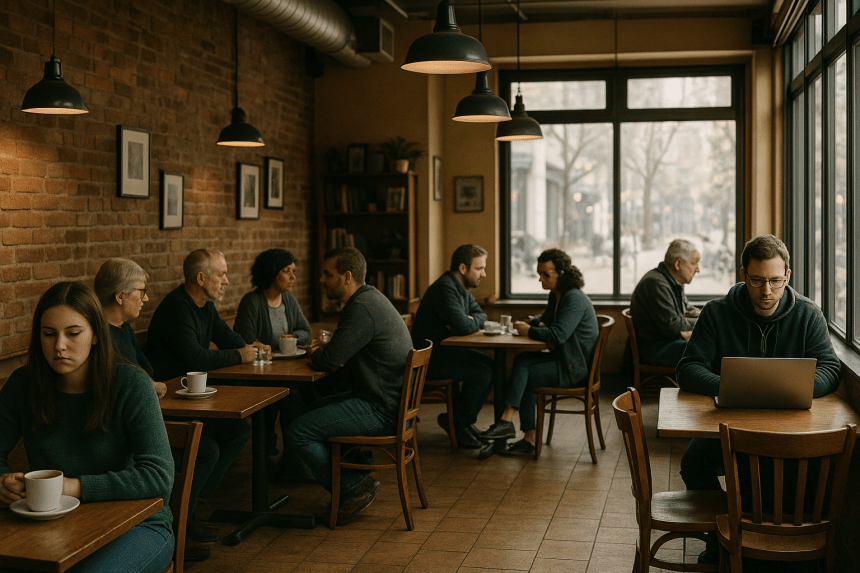
Is the Third Place Dying? Exploring the Decline of Our Social Sanctuaries
In our fast-paced, technology-driven world, the concept of the “third place” has come under scrutiny. Coined by sociologist Ray Oldenburg, the term refers to social environments separate from home (the first place) and work (the second place). Third places are where communities gather, interact, and build relationships. They include cafes, parks, libraries, and even local bars. However, many are beginning to wonder if these essential spaces are fading from our cultural landscape.
Several factors contribute to the decline of the third place. One significant influence is the rise of digital communication. While the internet has revolutionized how we connect, it has also shifted many social interactions online. Virtual platforms can facilitate connections across distances, but they often lack the depth and authenticity of face-to-face interactions. As people increasingly turn to social media and messaging apps, the frequency of in-person gatherings diminishes, leading to a decline in the importance of physical third places.
Additionally, the urbanization of communities poses challenges for traditional third spaces. As cities expand and housing prices rise, many neighborhoods are losing their local hangouts. Gentrification pushes out long-standing establishments, transforming unique community spaces into commercial entities that cater to wealthier clients. This shift can alienate long-time residents who once found comfort and connection in these areas, leading to a loss of communal identity.
Another factor is the growing demand for convenience. In a world where time is precious, many individuals prioritize efficiency over social interaction. Coffee can now be ordered through apps and picked up on the go, drastically reducing the opportunity for spontaneous conversations. The desire for convenience over communal engagement often leads to solitary behaviors, where people prefer to consume their coffee or meals alone rather than in the company of others.
Furthermore, the pandemic has had a profound impact on our social dynamics. Lockdowns and social distancing measures restricted access to many third places, resulting in a shift in social habits. While some people are eager to return to their favorite haunts, others are hesitant. Fear of crowded spaces and lingering health concerns has altered the way we approach socialization. This has resulted in a reevaluation of what it means to gather and connect with others.
Despite the challenges facing third places, there are glimmers of hope. Community leaders and entrepreneurs are recognizing the need for these social sanctuaries and are creative in fostering them. Innovative approaches like pop-up events, community gardening, and neighborhood meet-ups are resurfacing as ways to encourage social interaction. Additionally, some cities are investing in public spaces, transforming parks and plazas into vibrant areas that invite people to come together.
We must also acknowledge the resilience of human connection. Throughout history, people have long sought spaces to gather, share experiences, and create bonds. Even in times of uncertainty, individuals yearn for connection and belonging. By understanding the evolving nature of the third place, communities can adapt and create inviting environments that nurture social interaction.
In conclusion, while the decline of third places is a pressing concern, it does not signal the end of communal gathering. Instead, it opens a dialogue about our changing social fabric. By embracing innovative strategies and fostering inclusivity, we can ensure that third places evolve rather than disappear. As we navigate this new landscape, the importance of preserving our social sanctuaries cannot be overstated. They are essential to our well-being, community cohesion, and the overall fabric of society.






 English
  Arabic
  Khmer
Khmer  Vietnamese
  Tagalog
  Italian
  Spanish
  Japanese
  Chinese
  German
  French