



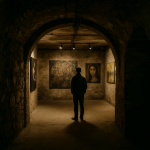



The Rocks is one of those Sydney places that can feel like two different destinations at once. On one side, it has postcard views, weekend crowds, souvenir shops and visitors moving in packs between Circular Quay and the Harbour Bridge. On the other, it has narrow lanes, sandstone walls, old pubs, hidden courtyards and quiet corners where the city’s past feels much closer than the harbour cruise brochures suggest.
The trick is knowing how to move through it.
This historic precinct sits beside Circular Quay and is widely recognised as the birthplace of modern Sydney, with European settlement beginning in the area in 1788. That history is still visible in the streets, buildings and laneways, even if the main routes can sometimes feel heavily polished for tourists.
Start early if you can. The Rocks is at its best before the crowds thicken, when the light hits the sandstone and the laneways are still quiet. Rather than beginning with the busiest stretch along the water, take a slower route through the back streets. George Street is useful as a spine, but the real character sits just off it.
Nurses Walk is a good place to begin. It is narrow, textured and easy to miss if you are moving too quickly. Follow the lanes without treating the area like a checklist. Part of the appeal of The Rocks is that it rewards wandering. A small staircase, a side passage or a half-hidden courtyard can shift the mood completely.
For a bit of context without turning the day into a history lesson, stop by The Rocks Discovery Museum on Kendall Lane. It has free entry and is housed in a group of reconstructed heritage buildings connected to the area’s earlier commercial life. It is a useful way to understand the layers of the precinct before heading back into the streets.
Cadmans Cottage is another worthwhile stop, not because it takes long to see, but because it helps anchor the area’s age. Built in the early 1800s, it is one of Sydney’s oldest surviving buildings and sits close to the harbour, surrounded now by a much louder, busier city.
If you want the classic Rocks experience without feeling funnelled through the most obvious tourist route, aim for Argyle Street and the Argyle Cut. The sandstone passage has a rough, practical beauty to it, and it gives you a sense of the physical work that shaped this part of Sydney. From there, keep walking up toward Observatory Hill. It is close enough to be easy, but far enough from the busiest section to feel like a breather.
Observatory Hill gives you one of the best low-effort views in the city. You get the Harbour Bridge, the water and the surrounding rooftops without needing to pay for a lookout or join a queue. Bring a coffee, sit for a while and let the city move around you.
Food and drink in The Rocks can be tricky. There are good options, but there are also places trading mostly on location. A simple rule helps: avoid eating on the most obvious corner at the busiest time. Look for smaller bars, older pubs and side-street spots where people seem to be settling in rather than rushing through. The Rocks has a long pub culture, and several historic hotels remain part of the area’s appeal.
The weekend markets can be enjoyable, but they are not the whole story. If you go, treat them as a casual browse rather than the main event. Move slowly, look for locally made items and avoid buying something just because the setting makes it feel more special than it is. The best souvenir from The Rocks is often a good photo, a quiet walk or a better understanding of Sydney’s older streets.
For culture, the Museum of Contemporary Art is an easy addition. It sits near the edge of the precinct and offers a sharp contrast to the colonial texture around it. Even if you only step inside briefly, it helps balance the day so The Rocks does not become purely about old buildings and harbour views.
The best way to avoid tourist trap energy is to stop trying to “do” The Rocks too efficiently. Do not rush from attraction to attraction. Do not spend the whole time on the waterfront. Do not assume the busiest place is the best place. Instead, give yourself two or three loose anchors, then let the side streets fill in the gaps.
A good version of The Rocks might look like this: arrive by train or ferry at Circular Quay, walk into the back lanes, visit the Discovery Museum, wander through Nurses Walk, pause at Cadmans Cottage, cut through Argyle Street, climb to Observatory Hill, then drift back down for a drink or a gallery stop.
Seen this way, The Rocks becomes less of a tourist precinct and more of a living pocket of Sydney, polished in places, crowded at times, but still full of texture if you know where to look.






 English
  Arabic
  Khmer
Khmer  Vietnamese
  Tagalog
  Italian
  Spanish
  Japanese
  Chinese
  German
  French