


Beyond Home and Work: Are We Losing Our Third Places?
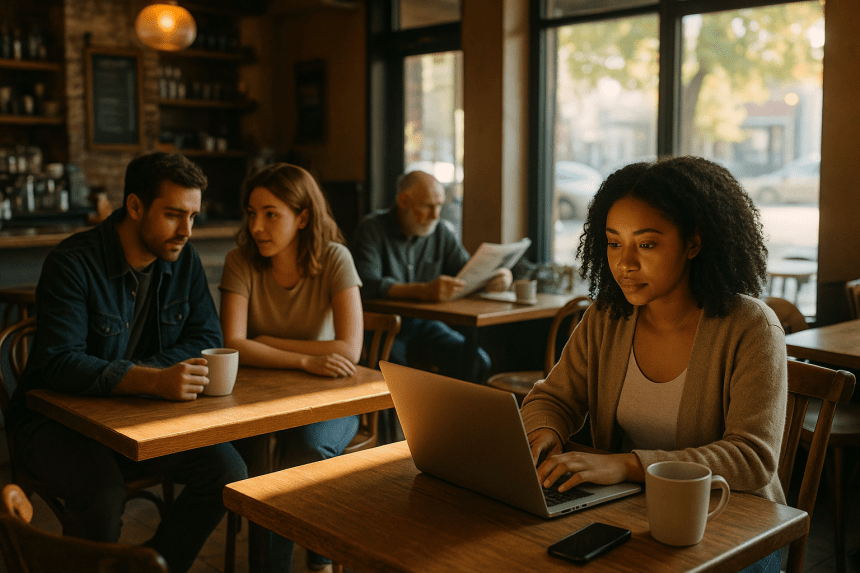
In contemporary society, discussions about our social lives often focus on the dichotomy between home and work. These two spaces define significant portions of our daily routines, yet many people find themselves yearning for a middle ground—what sociologist Ray Oldenburg termed “third places.” These are the informal gathering spots outside of home and work, like cafes, libraries, parks, or community centers, where social interactions thrive. However, as the modern landscape shifts, one must ask: Are we losing these essential spaces?
To understand the decline of third places, it is essential to consider what they represent. Third places serve as vital hubs for community engagement, offering a relaxed atmosphere where conversations can flourish. They are characterized by accessibility, neutrality, and a spirit of inclusivity. Think back to the small-town diner where regulars share stories or the bustling community center hosting weekly knitting clubs. These locales foster bonds and promote social cohesion in ways that home and work often cannot.
However, as urban development accelerates and technology reshapes our interactions, the question arises: Are these spaces disappearing? The answer is not a straightforward one. On one hand, cities continue to grow, rendering some traditional third places obsolete. Gone are the mom-and-pop shops that were once the heartbeats of neighborhoods, replaced by sleek coffee chains and online alternatives. The impact of this shift raises concerns about the homogenization of social spaces, where locals increasingly congregate in commercial environments that lack character and vibrancy.
Furthermore, the rise of remote work has altered how we interact. While working from home offers flexibility and convenience, it can also lead to social isolation. The spontaneous encounters that once punctuated our days—chats with coworkers in the break room or after-work drinks—are becoming rare. For many, virtual meetings have supplanted these interactions, but they fail to replicate the organic connection found in third places.
Yet despite these challenges, there is an intriguing counter-narrative. Urban centers are seeing a revival of community-oriented spaces, often driven by grassroots initiatives. Cities are reimagining parks, transforming underutilized areas into vibrant spaces for communal gatherings. Farmers’ markets and pop-up events nurture local economies while fostering social ties among residents. Initiatives aimed at cultivating community gardens and art projects have emerged as responses to the need for connection, emphasizing that while some traditional third places may fade, new ones can sprout from the ground up.
Technology also offers a dual perspective. While it contributes to the erosion of face-to-face interactions, it can also create networks that facilitate the emergence of new third places. Social media platforms and community apps enable individuals to organize meet-ups, encouraging local connections that might not have occurred otherwise. This blending of virtual and physical interactions could signal a new era for third places, where digital tools complement rather than replace real-world connections.
To navigate this evolving landscape, individuals must become intentional about cultivating and participating in third places. Community engagement is crucial; it requires a conscious effort to support local businesses and participate in neighborhood events. The onus is on us to create inviting environments, whether by hosting gatherings at home, attending local events, or simply striking up a conversation with a fellow patron at a coffee shop.
Ultimately, the future of third places lies in our hands. While it is easy to lament their decline, there is an opportunity to adapt and innovate. By recognizing the value of these spaces and actively investing in their revival, we can enrich our social lives and strengthen our communities. It is within these third places that we discover a sense of belonging—where our identities are woven into the tapestry of shared experiences.
As we move forward, let us embrace the challenge of preserving and creating spaces that foster connection and conversation. The soul of a community thrives in these locales, and together, we can ensure that they continue to exist as vibrant pillars in our lives. After all, beyond the confines of home and work, we all seek that elusive balance and the comfort of a place to call our own, a third place where we can connect, reflect, and belong.




 English
  Arabic
  Khmer
Khmer  Vietnamese
  Tagalog
  Italian
  Spanish
  Japanese
  Chinese
  German
  French