




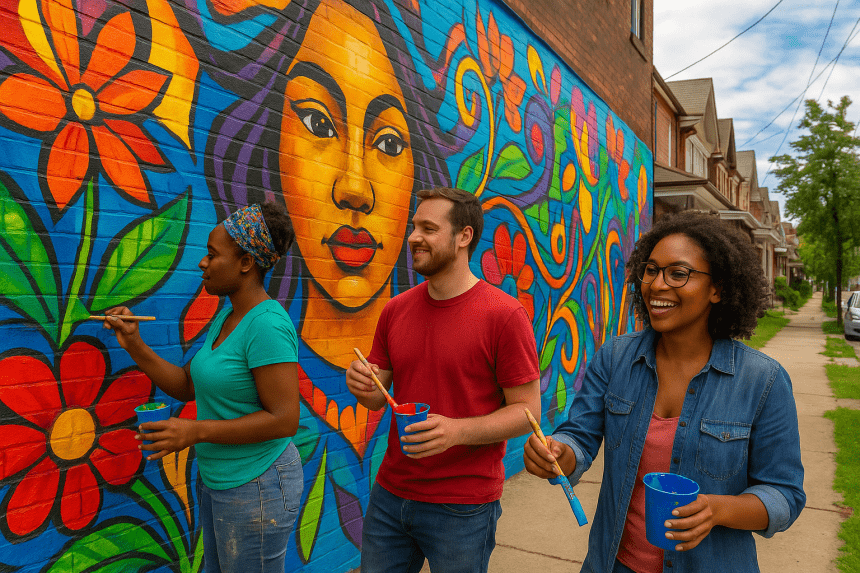
In recent years, neighborhoods across the globe have embraced murals as a vibrant form of public art. These large-scale artworks transform spaces and breathe new life into urban areas. As colorful expressions that adorn brick walls and concrete facades, murals offer more than just aesthetic appeal; they serve as powerful tools for community building and revitalization.
Murals often become focal points for neighborhoods, attracting locals and visitors alike. Their presence can spark curiosity and invite conversations. When people gather around a mural, they share stories and experiences, fostering a sense of connection among residents. This communal activity serves to strengthen relationships, turning casual acquaintances into friends. The act of gathering around art not only promotes local engagement but also creates an environment where individuals feel a greater sense of belonging.
Moreover, murals reflect the identity and culture of a community. Artists frequently draw inspiration from local history, traditions, and the diverse backgrounds of residents. This representation promotes pride among community members, encouraging them to celebrate their shared heritage. When people see their lives and stories depicted in a mural, it validates their experiences and reinforces a collective identity. Such representation is vital in fostering inclusivity and strengthening the fabric of a community.
Beyond fostering connection, murals play a significant role in revitalizing neighborhoods. In areas that may have suffered from neglect or disinvestment, a well-placed mural can bring a sense of hope and renewal. These artworks have the power to transform drab spaces into lively attractions. Local businesses may benefit as foot traffic increases, leading to improved economic opportunities. A vibrant mural not only beautifies a neighborhood but also acts as a catalyst for further development, inspiring additional investments in public spaces and local enterprises.
Murals can also serve as educational platforms, conveying important messages or raising awareness about social issues. Artists often use their work to address themes such as environmental conservation, social justice, and community resilience. By sparking dialogue around these topics, murals encourage critical conversations that can drive positive change. They invite viewers to reflect on their surroundings and consider the impact of collective action. In doing so, they promote not only community cohesion but also a commitment to making neighborhoods better places to live.
In addition to their aesthetic and social impact, murals encourage collaboration among diverse groups. Community members often come together to participate in mural projects, whether through fundraising events, volunteer days, or workshops led by the artists. This collaborative process fosters a sense of ownership and pride, as individuals contribute to the creation of something meaningful. The teamwork involved can bridge generational, cultural, and social divides, making the mural a symbol of unity.
As communities across the world continue to embrace the power of murals, the benefits are clear. These vibrant works of art enhance public spaces, bring neighbors together, and celebrate cultural diversity. They breathe new life into urban environments, creating dynamic settings that invite engagement and connection. By investing in murals, communities take a bold step toward revitalization and strengthened social bonds.
The journey of a mural often begins with ideas exchanged among community members and artists. The process may take time, but the outcome is well worth the effort. As more towns and cities recognize the impact of these colorful expressions, they can harness the potential of murals to create united and resilient communities. Through the celebration of art, the act of coming together, and the acknowledgment of shared stories, murals are not just paintings on walls; they are vibrant threads in the rich tapestry of community life.



 English
  Arabic
  Khmer
Khmer  Vietnamese
  Tagalog
  Italian
  Spanish
  Japanese
  Chinese
  German
  French